
Meta Description:
Choosing the right domain name is critical for your startup’s branding, SEO, and long-term success. Learn insider tips on how to pick a perfect, scalable domain name that won’t hold you back.
Why Your Domain Name Matters More Than You Think
You might be thinking: “It’s just a URL. Can it really make that big of a difference?”
Yes. Absolutely.
Here’s why:
- Brand Identity: Your domain is often the first thing people associate with your business.
- Trust Factor: A clean .com domain signals professionalism far more than a long, confusing alternative.
- SEO Impact: While not the biggest ranking factor, having relevant keywords in your domain can give you a small edge.
- Marketing Simplicity: Imagine trying to say your domain out loud at a networking event or printing it on a business card. If it’s hard to spell or pronounce, you’re already losing.
Startups often underestimate how much weight a domain carries — especially when scaling. Get it right now, and you’ll avoid costly rebrands down the line.
Step 1: Align It With Your Brand (Not Just Today, But Tomorrow)
The golden rule: your domain should match or closely reflect your company name.
But don’t stop there.
Ask yourself:
- Will this name still fit if your startup pivots slightly?
- Could it work across multiple products or services?
- Is it easy to remember after hearing it once?
For example, Canva.com is short, memorable, and scalable. Even though the tool started as a design platform, the name works even if they expand into other creative tools.
Avoid being too narrow like graphicdesignify.com — you’ll box yourself in before you even launch.
Pro Tip: Test It Like a Real User Would
One trick I use: say your domain out loud five times fast. If you stumble, chances are your customers will too.
Also, test it by telling someone the domain once and then asking them to type it. Did they get it right? If not, rethink it.
Step 2: Keep It Short, Simple, and Spellable
This seems obvious, but I see founders trip up here all the time.
Here’s the checklist:
✅ No hyphens
✅ No numbers (unless it’s part of the brand, like 99designs.com)
✅ Easy to type without second-guessing
✅ Under 15 characters if possible
If you’re building a serious business, treat getting a .com like securing your business license — do it early.
Now, that said — there are exceptions:
- Tech startups using .ai or .io for niche appeal
- Local businesses using .city or .london
- Creators using .me or .hey
Just know the trade-offs before going off the beaten path.
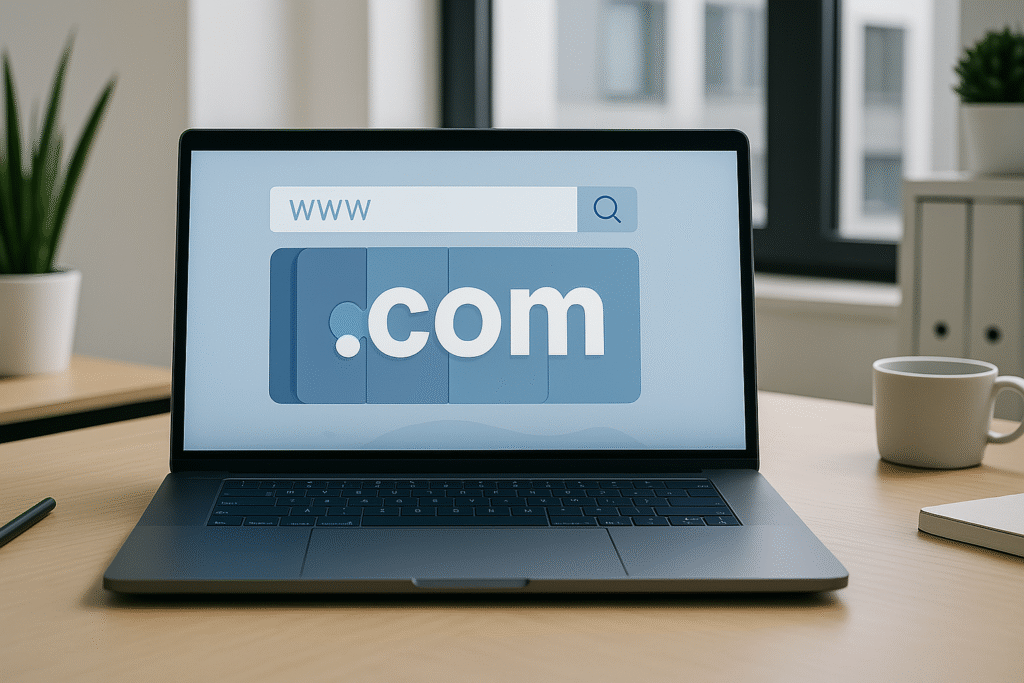
Step 3: Go .com First, Always
I know, I know — .com domains are taken. That’s the frustrating truth.
But hear me out:
- .com is the default. People assume your site ends in .com — even if it doesn’t.
- Investors and partners expect it. A .io or .co might look trendy, but it can raise red flags for legitimacy.
- It’s easier to sell or exit with a .com. Buyers prefer them, plain and simple.
If you’re building a serious business, treat getting a .com like securing your business license — do it early.
Step 4: Avoid Trademark Trouble Before You Start
This is one of the most overlooked steps — and one of the most dangerous.
Before locking in your domain, do a quick check:
- Search the USPTO trademark database (or your local equivalent)
- Check WHOIS for existing trademarks in your space
- Look up Google Trends and LinkedIn to see if another company has a similar name
Why?
Because even if you own the domain, someone else could legally force you to hand it over — and that’s not a battle you want to fight six months post-launch.
Also, double-check social media handles. You don’t want to launch and find out @yourbrand is taken on Instagram or Twitter.
Step 5: Use the Right Tools to Brainstorm and Check Availability
Picking a domain isn’t guesswork — there are tools that make it easier.
Here are the ones I recommend:
🔍 Brainstorming:
- Namecheap Word Generator – mixes keywords with suffixes/prefixes
- LeanDomainSearch – great for visual brainstorming
- NameMesh – shows available combinations across extensions
🛒 Checking Availability:
- Namecheap – affordable, user-friendly
- GoDaddy – good for premium domains
- Hover – clean interface, great for designers
Pro tip: Don’t register your domain through your host unless they offer real value. Shop around — prices vary wildly.
Bonus Tips Only Hosting Insiders Know
Here are a few things most guides won’t tell you:
✅ Register for Multiple Years (and Turn On Auto-Renew)
Nothing kills a startup faster than forgetting to renew your domain. Set it and forget it — for at least 2–3 years.
✅ Use Private Registration
Default WHOIS info makes you vulnerable to spam and domain squatters. Pay the $10/year for privacy — it’s worth it.
✅ Host Domains Separately From Hosting (If Possible)
Don’t tie your domain to your hosting provider. If you ever need to switch hosts, it gets messy. Keep domain registration independent.
When (and How) to Consider a Premium Domain
Sometimes, the perfect domain is already taken — but available for purchase.
Should you buy it?
Depends.
Ask yourself:
- Does this domain directly support your brand or marketing?
- Am I prepared to spend anywhere from $500 to $50,000+?
- Do I have the budget to absorb the cost without slowing down development?
If yes, go for it. Many successful startups have done exactly that.
But don’t fall into the trap of paying thousands for a barely-related domain just because it’s available. That’s a sunk cost waiting to happen.
Final Thoughts: Treat Your Domain Like a Long-Term Investment
At the end of the day, choosing a domain name isn’t about trends or clever wordplay — it’s about making a smart, lasting decision for your startup.
Think of it like naming your child — you wouldn’t pick something cute today that becomes embarrassing tomorrow.
So take your time. Test it. Say it out loud. Run it by mentors or potential customers.
And if you’re still stuck?
Come back to this list. Ask the hard questions. And remember: the best domain names aren’t flashy — they’re functional, memorable, and built to last.
Got a domain idea you’d like feedback on? Drop it in the comments — happy to weigh in from an insider’s perspective.
